Wix has just published their first State of Websites report, pulling data from over 310 million users. It covers how websites are being built, found, and used to generate revenue in 2026. Some of it is Wix-specific – MCP sessions, their AI builder stats – and you can read all of that directly in the report if it interests you. But buried in the data are some findings about SEO, blogging, reviews, and AI search that are worth talking about in plain English, because they apply to pretty much any business website.

Search still drives more traffic than any other source
42% of all website traffic still comes from search. Direct traffic accounts for 40%, social for 13%.
If you’ve spent any time on LinkedIn recently you’d be forgiven for thinking Google was on life support and everyone was getting their website visitors from ChatGPT. They aren’t.
Search is still the dominant traffic source in 2026. The gap between search and social is almost 30 percentage points. The “SEO is dead” crowd has been wrong repeatedly, consistently, and with impressive dedication.
Blogs drive bookings – and the more you publish, the bigger the effect
This one will either vindicate you or make you feel really fucking guilty about the blog you haven’t updated since last spring.
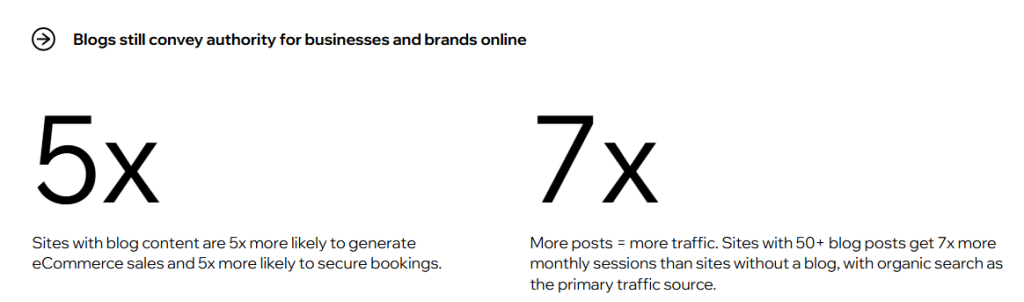
Sites with blog content are five times more likely to generate bookings than sites without. And sites with 50 or more blog posts get seven times more monthly sessions than sites with no blog at all, with organic search as the primary source of that traffic.
What this means practically is that blogging compounds. One post won’t transform your search visibility. Ten posts won’t either, necessarily. But 50 posts of useful, relevant content – published consistently over time – builds the kind of search presence that keeps working without you having to do anything.
The businesses whose blogs bring in enquiries aren’t necessarily publishing every day. They’re publishing consistently, writing about the questions their clients ask, and not deleting posts “because they feel a bit old”. Old posts that still answer a real question still bring in traffic.
Reviews drive revenue more than most businesses realise
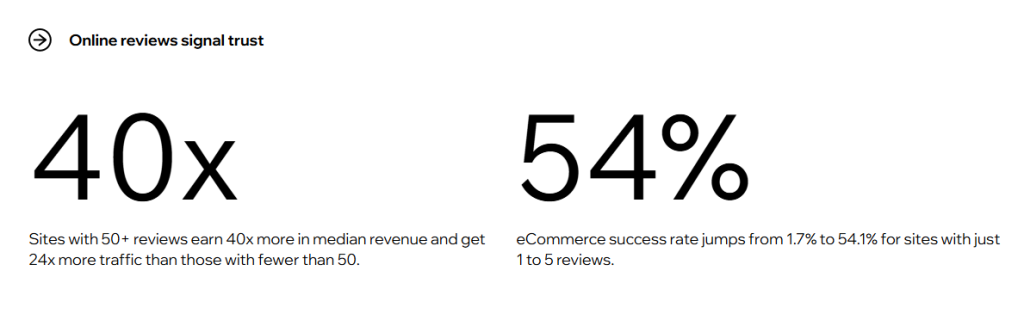
The review data in the Wix report is really interesting. Sites with 50 or more reviews earn 40 times more in median revenue and get 24 times more traffic than sites with fewer than 50.
But if you’re just starting out, look at this stat instead. Conversion rates jump from 1.7% to 54.1% for sites that go from zero reviews to just one to five. You don’t need 50 reviews to see a meaningful difference. You need a handful. A few genuine reviews from real clients changes how prospects perceive you, and it changes how search engines treat you too.
If you’ve never actively asked clients for reviews, this is your nudge to start. Most happy clients won’t think to leave one unless you make it easy and ask directly.
Structured data earns significantly more traffic and revenue
This one requires a small translation before we get to the numbers.
Structured data is extra information added to your website’s code that helps search engines understand what your pages are about – your business type, your reviews, your services, your events. When it’s implemented correctly, Google can use it to create richer search results: star ratings, FAQ sections, event details, that sort of thing.
The Wix data shows that sites with structured data markup that passes Google’s rich results inspection earn twice as much revenue and get nine times more traffic than sites without it.
Nine times is a significant number. Structured data isn’t new, and it’s not complicated to implement if you’re using a decent SEO plugin on WordPress – most of the basics are handled automatically. But it’s frequently done badly, or not done at all, and the gap between sites that get it right and sites that don’t is evidently quite large.
LLMs.txt – what the Wix data shows, and why I’d treat it cautiously
This is where I need to be honest with you, because the Wix report and the controlled testing I’ve seen point in different directions.
The report found that eCommerce sites with an LLMs.txt file earn twice as much revenue and get four times more traffic than those without. LLMs.txt is a file you can add to your website to tell AI crawlers what content to pay attention to – in theory.
The problem is that Reboot Online tested this properly. They published LLMs.txt files on two established websites, created test pages that could only be found via those files, and waited three months. Not a single AI bot visited the test pages. The bots were crawling other pages on both sites without any issue – they were just ignoring the LLMs.txt files entirely.
So what explains the Wix finding? Most likely this: websites that have gone to the trouble of adding an LLMs.txt file are also the websites that are doing everything else well. Better content, better technical SEO, better structured data. The LLMs.txt file isn’t the thing doing the work. It’s a marker for the kind of website owner who pays attention to their site.
That’s correlation, not causation. Adding an LLMs.txt file to an otherwise neglected website is unlikely to earn you twice the revenue. Fixing the fundamentals might.
AI bots are crawling websites – but they’re still a tiny slice of traffic
AI platforms are pinging nearly 700,000 Wix sites every month, and traffic from LLMs grew four times between 2024 and 2025. That sounds dramatic until you see the context: LLMs account for less than 1% of site traffic.
The theory the Wix report puts forward – that potential customers might be discovering businesses through AI search, then visiting the website directly to verify they’re legitimate before making contact – is plausible. Direct traffic to Wix sites in the US rose 71% since 2020, and that’s a notable increase. But the evidence that AI search is driving that is correlational at best.
What this means for your website right now is probably less than LinkedIn would suggest. Make sure your site is technically sound, loads quickly, and gives a clear picture of who you are and what you do. That serves AI crawlers, Google, and the human beings who land on your site regardless of how they found you.
The full Wix State of Websites report has considerably more in it – including the eCommerce data, the website build speed findings, and the MCP session numbers if that’s relevant to how you work. Worth a read if you want the complete picture.
If any of this has made you wonder what’s going on with your own website’s search visibility, let’s have a proper look. Book a 1:1 SEO session and I’ll tell you honestly where you stand.